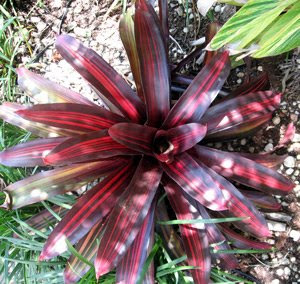
Friday, September 26, 2008

Bougainvillea - Preparing for the Big Bloom

Possibly the most spectacular blooming plant in Florida is the Bougainvillea. They bloom off and on throughout the year, but their biggest show is in the middle of winter. If you own a Bougainvillea you know that they grow incredibly fast during the warmer months and need frequent pruning to control their size. But one of the keys to a great bloom in the winter is to not prune them too late in the fall. They should be cut way back in September and then turned loose to do their thing. So now is the time to put on your heavy gloves and give them one final cut back for the year. You will probably need to shape them up a little from time to time, but any heavy pruning after October may seriously impact their big bloom.

A couple of other tips for getting the best bloom from your bougainvillea:
  • Full Sun: The more sun your bougainvillea gets, the more it will bloom. An Ideal location will provide full sun and shelter from cold winter winds.
  • Fertilizer: Fertilize regularly through the spring and summer. Give it one last shot in September or October. Use a fertilizer that is high in phosphorus and not too high in Nitrogen. A fertilizer formulated specifically for bougainvillea or blooming tropical plants is best.
  • Water: NOT TOO MUCH WATER. Bougainvillea thrive on dry conditions. Water only when they look wilted.

Tuesday, September 9, 2008

Inorganic Mulches


Inorganic mulch is anything that is not an organic material, in other words, anything that is not made from plants or plant byproducts. Inorganic mulch has the benefit of being more permanent. But that is also its biggest disadvantage because, unlike organic materials, it does not break down and enrich the soil.

Traditionally inorganic mulch has usually meant rock or gravel. There are a wide variety of rocks available to give a range of different colors and textures. Rock is as close to permanent as you can get. It doesn't float away easily and most of all, if done right, it is beautiful. Rock will usually cost much more initially, but won't have to be replaced regularly like wood mulches.

The most popular rocks are crushed marble and egg rock. Crushed marble comes in white, brown, green, grey and pink. Egg rock is smooth, rounded river rocks and comes in several shades. There is "white" which is a mixture of white and light browns, "brown" which is mostly medium browns and another which I know as "river jacks". It is a mixture of black, grey, brown and reds. River rocks usually are graded by size and offered in 3 or four different sizes. The smallest river rocks, usually 1/4 to 1/2 inch are called "chattahoochee".

Other available types of rock are crushed granite that is usually black and white speckled, lava rock, which is available in red or black and another volcanic rock that is one of my personal favorites. Different companies sell it under different names, but I know it as Timber-lite. It is rough textured, medium sized pieces that are mottled brown, black and tan. There is also a rock sold as "Cedar Bark Rocks" that is a brown rock that looks very much like chunks of cedar bark. If you like the looks of bark but don't like the fact that it is prone to floating away, this might be a good choice. There are also some fancier, more expensive rocks available if you are looking for something really special. Among others there are "Mexican Beach Pebbles" that are round, flat smooth rocks that come in a number of sizes and colors. In the picture above are Columbian River Rocks in red and gold.

If you are considering using rock in your landscape here are a few tips:

  • Light colors like white marble chips look spectacular when you first put them down, but they quickly get dirty looking from algae and debris like grass clippings and leaves. A darker color will camouflage a lot of that and look better longer. That is one reason I like the Timber-lite.
  • Lava rock usually doesn't do well in shady, wet areas. Moss, algae and pilea tend to get rooted in the large pores and is very hard to control.
  • Rock is usually available in bulk, by the cubic yard or in 1/2 cubic foot bags. By the yard is usually about 25-50% cheaper, but it is a lot more work. Unless you are doing a large area that will require several yards, I would go with the bags. If you have it delivered in bulk, you have to pile it somewhere and then shovel it into a wheel barrel to distribute it where you want it. Then you have to clean up where the pile was. With the bags, you just carry them to where you want them, open them and dump them. Usually you want the rock about an inch and a half to two inches deep. That means that a bag will cover 3-4 square feet. Usually large rocks, like extra-large egg rocks will need to be a little deeper and small rocks like chattahochee, not quite as deep. The reason being that big rocks mean bigger gaps between them. If you like the look of the extra large egg rocks, I would suggest buying about half extra large and half medium. Spread the medium first and then the large on top. You get better coverage that way, saving some money, but still get the look of the larger rocks. If you buy by the yard, a yard will cover about 150 square feet.
  • Always use a good weed mat under your rock. In our sandy Florida soil rocks have a way of slowly sinking into the sand and disappearing! A weed mat will keep them on top.
  • Always use some type of edging between rock areas and lawn. I usually use a commercial grade plastic edging but you can use stone, brick or any other you like. If you don't use some type of edging. the stones will invariably get spread into the lawn and the lawn will grow into the rocks. If you try to edge with a power edger, you will be hitting rocks which is hard on the machine and dangerous for you.

Besides rock, there is also now rubber mulch! It is made from recycled tires and dyed in a variety of colors, including blue and green! It is very permanent. It is available in different textures and grades, some with the steel belts completely removed, some not. If it is going to be in a play area or someplace you might be walking barefoot, it is very important that you get it with all the steel removed. It is fairly expensive, usually $10-20 for a 1 cubic foot bag, but the price seems to be coming down. It can give a very nice effect and is a good use for old tires. It washes away easier than rocks but not as easily as wood. Again, I always use weed mat and edging with rubber mulch.

Monday, August 25, 2008

Using Mulch in Your Garden

This is probably a good time to talk about using mulch in your garden. First, it may be a good time, because by late August, your probably getting sick of pulling weeds about now. Secondly, if you already had mulch, Tropical Storm Fay probably just washed it all away and you're thinking about replacing it.

Mulch serves several very important functions and is almost always a good idea.
  1. It slows down weeds! Nothing stops them in Florida, but you need to use every weapon at your disposal to give yourself an edge.
  2. It helps retain moisture. O.K. that's not an issue right now, but in a few months it will be.
  3. It helps regulate soil temperature.
  4. It helps prevent disease. Mulch stops soil from splashing up on the lower leaves of a plant, which helps stop the spread of some fungus diseases.
  5. Mulch beautifies the garden, giving it a neater, more finished look.
There are many choices when deciding on a mulch. There are organic mulches, like wood chips and pine needles, etc. and there are inorganic mulches like rocks. In general, organic mulches are better for the soil and are less expensive (at least in the short run). As they decompose, they enrich and become part of the soil. Inorganic mulches are more expensive on the front end, but more permanent. Individual taste will determine which looks better.

If you decide on an organic mulch, most people in South Florida use shredded wood mulch. The two most common are cypress mulch and dyed, recycled wood. The cypress has a beautiful, natural look and smell and will usually last about 6 months, although the color will fade to kind of a gray color after 2 or 3 months. The recycled mulch is made from used lumber and plywood, etc. and is usually dyed red, but sometimes can be gotten in gold, black or some other color. It doesn't look as natural. Some people like the look better than cypress, some don't. Again, its personal choice. It does retain its color much longer than cypress and lasts a little longer. Plus it has the benefit that it doesn't use up cypress trees, a disappearing resource. When red mulch is fresh, some of the dye does come off easily so plan on having red hands after you spread it (and a funny smell) and if it comes in contact with concrete driveways and sidewalks it will leave a stain that is sometimes hard to get off. Other common organic mulches are:
  • Pine Bark Nuggets- they are beautiful but are very prone to floating away and seem to harbor carpenter ants.
  • Wood chips - from tree trimmings. The biggest benefit-they are often available free. On the minus side, they decompose very fast and sometimes contain unwanted seeds.
  • Pine Needles - Often called "pine straw". They decompose fast but give a beautiful natural look. They are especially useful in areas that already have pine trees. You can buy a few bales to mulch the beds initially and then rake the falling needles in to the beds regularly to replenish.
There are countless other possibilities from lawn clippings to peat moss, but these are the most common and practical for use in South Florida landscapes. Just a few more tips for using organic mulches:
  • If buying cypress or recycled wood, look for wood that is shredded rather than chips. In other words look for long, fibrous looking pieces. They will interlock and form a solid mat after a few days that will be less likely to float away in rainy weather.
  • Make mulch a minimum of 1 inch deep. 2 inches is better.
  • Usually with organic mulch, it is better not to use any kind of weed mat underneath. The mulch seems to stay put better when it is in direct contact with the ground. Also, as the mulch decomposes it will form a layer of soil on top of the weed mat. That will allow weeds to start above the mat and then put roots down through it, making them that much harder to pull.

In the next post, I'll talk more about inorganic mulches.

Wednesday, August 13, 2008

Gardening with Air Plants


This is one of the arboreal bromeliads, often just called "air plants" They do best just hanging in a tree rather than planted in the soil. This is a Tillandsia bulbosa. There are hundreds of species of tillandsia (about 650 at last count), some of them native to Florida. The most common member of this family is probably Spanish Moss. But there are many others with large beautiful blooms. In any swampy area you will find them growing high in cypress trees with bright red flowers. Many make great landscape plants that will really give your garden that tropical rain forest feel. You'll usually find them for sale at plant sales and garden shows. Just wire them to a tree, in the shade of the canopy and they will usually attach themselves over time. They just live off whatever moisture and nutrients they get from the air soil they will appreciate a spritz with the hose occasionally, especially in the winter when the humidity is lower. If you think they need some fertilizer you can spray them with a weak solution of liquid plant food like Miracle Grow.

Monday, August 4, 2008

Year Round Color with Bromeliads


If you appreciate tropical style landscaping, one of the best ways to achieve an authentic tropical look is with bromeliads. As a group they are amazingly versatile and can provide year round color. Most varieties fair best in the shade, but there are some that do quite well in mixed light or even full sun! The often spectacular blooms last for month's and many varieties have very colorful leaves that are quite striking when they're not blooming. By using different varieties you can have bromeliads blooming in your garden every month of the year. They always provide interesting form and texture in a tropical garden.


They actually require minimal care. Most varieties need very little in supplemental watering. That's because bromeliads store their own water. The leaves actually form small reservoirs where water collects and is slowly absorbed by the plants. The roots serve more as anchors than as a way of taking up water and nutrients. That's why some types of bromeliads actually grow better hanging in trees than they do in the ground.
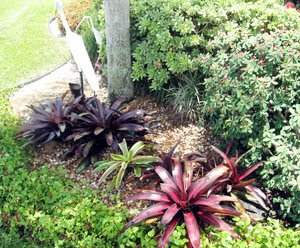
There are hundreds of different varieties. Consult a book or your local garden center to see which varieties suit your needs. The initial price of a bromeliads may seem a little expensive. They usually cost from $10 t0 $30. But with a little attention they will multiply and last for years. The individual plants bloom once and then slowly die. But before they die, they will produce several off shoots, often called "pups". About once a year you will want to cut away the old dead and dieing plants and separate the pups. In most cases the pups will start off as little sprouts near the base of the mother plant. In time they will put out root systems of their own. At that point you can separate them with a pair of sharp pruners. Some varieties are more prolific than others, but in a few years you should have plenty to give to friends or trade for other types that you don't have.

The only pest problem I have had with them is snails. They love to hide in the damp centers of the plants during the day and come out and eat the leaves at night. An occasional application of snail bait in the area usually takes care of the problem. Or if there are just a few, and you can find them, you can just pick them out. Other than that the only trick is to get the right bromeliad in the right lighting conditions. If you put shade varieties in the sun, they will sunburn and never look good. Ask your supplier for advice and when in doubt, it is better to ere on the side of too much shade. A little bit of liquid fertilizer, like miracle grow, once in a while keeps them in top condition.

Next time you are looking for a plant to give your garden a little spot of low maintenance color, consider bromeliads.

Thursday, July 24, 2008

Mid-summer Gardening

We're now in the middle of a typical South Florida summer. Hot days, hot nights, high humidity and plenty of rain. The good news is you don't have to water your garden and your plants are growing like gang-busters. The bad news is that the weeds, insects and fungi are also thriving. Plan on doing a lot of trimming and weeding over the next few weeks. Caterpillars are big problem this time of year. The best way to control them is to monitor your plants closely, try to catch them early and physically remove them. If you have to resort to chemicals, Sevin is a good all purpose caterpillar spray that is relatively safe to use. The trick is to find a chance to spray between rain storms. Your best bet is to do it in the morning before it gets too hot and when the insecticide will have a few hours in which to work before the afternoon thunderstorms start. Good luck.

Wednesday, July 23, 2008

Welcome to Florida Gardening

South Florida is one of the best places in the world for gardening. A huge variety of native plants as well as tropical and subtropical exotics thrive here and you can garden 12 months a year. But Florida gardening is not without its challenges. The bugs and the weeds also thrive 12 months a year and if you are from another part of the country, most of the plants here may be unfamiliar to you. And for the ones you know, the rules for growing them may be different.

I've lived in south Florida my entire life and have been in the landscaping and nursery business for almost 25 years. I've decided to start this blog to share some of the information that I've learned regarding Florida Gardening. I'm still working full time in the landscape business, doing primarily residential renovation projects, so I plan to write about real life gardening experiences, problems and solutions as well as my experiences with and recommendations for specific plants.

If you live in Florida or plan to soon and you are interested in gardening and landscaping, please come back often.